
About the Cité du Train
The Cité du Train – SNCF Heritage is the first railway museum in Europe, located in Mulhouse, Alsace. It welcomes about 115,000 visitors per year across 20,000 m² of covered spaces, within a site of 60,000 m², and its attendance is increasing.
The museum is managed by an independent private association, whose board of directors is under the supervision of SNCF. Any significant development must be presented and validated: a platform choice must therefore be defensible and sustainable, not just functional.
Three activities coexist: an on-site ticket office, an online sales channel, and a shop with over 1,000 SKU's. Three cash register positions at the reception — two for the ticket office, one for the shop — operated by three supervisors and five reception hosts and hostesses, without internal IT service.

Understanding business needs
These three activities relied on two systems that did not communicate, requiring daily manual reconciliation and making the accounting allocation of revenue difficult. The museum's request was more specific than just "new software".
Centralization — on-site ticketing, online ticketing, and shop in a single system.
An online ticket office connected to the counter, with scannable tickets upon arrival.
Windows 11 compatible cash registers — security requirement after a breach — and the NF525 tax certification
Gauge management for activities with limited capacity: guided tours, escape games, driving simulator experiences
A complete pricing grid : full, reduced, child, senior, family, free, groups, and combined tickets with neighboring museums
Partner tickets — Museum Pass, combined entries — which must remain scannable on site
A predictable subscription rather than a commission per ticket, on a platform designed to last five to eight years
What the museum ruled out matters just as much: no online sales for the shop, no turnstiles or real-time access control, no marketing automation at this stage, and no redesign of the main site. The question was about the ticketing software, not the site.
Odoo as a solution
Odoo natively covers the three activities: Point of Sale, Website and e-commerce, Events, Sales, Purchases, Inventory, Portal and Accounting fall under the same product, so that unification was initially a configuration task before becoming a development task. The solution is certified NF525, the license is a predictable subscription and not a deduction on each ticket sold, and where the reality of the museum diverged from the product, it could be properly extended rather than distorted.
Two biases structured the project. The main site of the museum remained in place, with the ticketing section being rebuilt in Odoo in the museum's colors, so that the visitor does not perceive the transition from one to the other. And the catalogs remain separate — the ticketing posts do not sell boutique items, the boutique post does not sell tickets — while all transactions feed the same database. The separation is what the teams see; the common base is what ends the reconciliation.

What has been implemented
The work is divided between what Odoo does as standard and what had to be developed. Delivered on Odoo 19 Enterprise & custom 14 modules.
Standard Odoo, configured
Point of Sale on three terminals, separate product categories, and offline functionality that allows continued selling in case of an outage.
Purchasing and Inventory on over 1,000 boutique SKU's with barcodes, migrated with their supplier codes, costs, and taxes.
Sales and Portal for group orders and CSE, as well as native gift vouchers and personalized invitations.
Accounting downstream of all channels, with revenue assigned directly rather than reconstructed afterward.
Events as the foundation of the visitor journey, and Knowledge as a written support backlog maintained by the museum itself.
Role-based rights: a cashier sees the cash register screen, and nothing else.
Specific: the Events application rethought around time slots
The Odoo Events application is designed for conferences. A museum is not a conference: visitors arrive in time slots, all day, every day, and capacity is measured by the number of people crossing the threshold. The essence of the specific layer fills this gap.
A real gauge per time slot. The number of seats becomes a stored and modifiable value rather than a calculation derived from the event, and the gauge of the time slot takes precedence over any ticket quota: the room is the hard constraint.
A calendar on the page, not a stack of windows. The standard makes the visitor go through three successive windows, with no total displayed. Instead: a calendar integrated into the event page — date, then time, then quantities, with live availability and a total that updates. Week starting on Monday, past days grayed out, and an explicit message when a month has nothing to sell.
Time slots of the day that remain sellable. The standard hides a 10 AM slot once 2 PM has passed. A museum sells to latecomers all day: the filters have shifted from time to date.
The competition between the web and the counter. Availability is revalidated on the server side upon submission, and seats are refreshed in real-time on all open terminals as soon as a ticket sells somewhere.
The expiration of reservations. Each event has a validity period; a nightly task cancels what has expired and frees up the seats.
Questions that validate. The country becomes a list of values with France as the default rather than a free field, and the postal code is only required from French visitors, checked on metropolitan and overseas beaches.
Private events for CSE. A fourth visibility mode driven by partner tags, applied in the database, in lists, and on direct URLs.
Specific: count people, not tickets
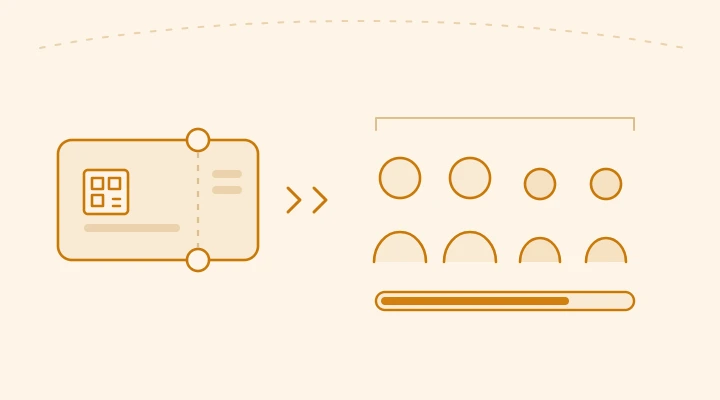
A family pass, a group reservation, a guided tour: each is a sales line covering multiple visitors. The attendance is therefore recorded as a full value, from the product to the ticket, then to the registration and up to the total of the event — and only confirmed or present registrations, paid or free, are counted, so that an abandoned cart never inflates the attendance. It appears on the event, in a column on the registration list, and as a measure in the sales pivot table.
Specific: tickets, badges, and access control
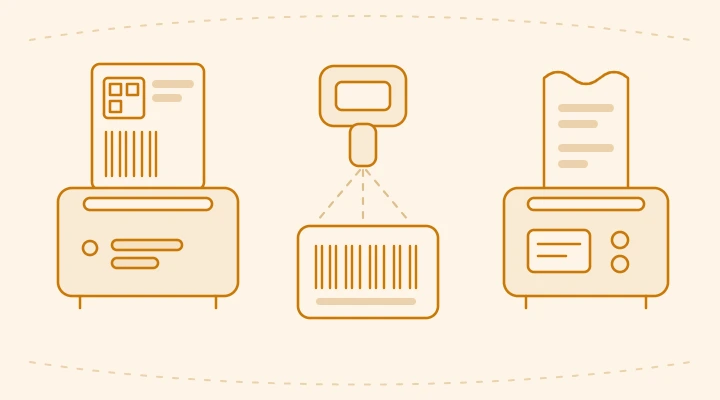
Each registration carries a control QR code. Online buyers receive their badge by email, scanned from their phone at the entrance, including from a second remote control point on busy days. The badge is a card of 80 × 50 mm, calibrated on the thermal roll that the museum already purchases pre-printed — the standard Odoo badge is 82 × 96 mm and does not fit — carrying the event, the type of ticket, the location, the participant, a QR code, and a validity block that displays in three ways, its barcode rotated to run along the edge.
The existing hardware weighed as much as the software. The cash registers were running on Windows 10 and could not be certified for Windows 11; the cash drawers are integrated into custom furniture and cannot be replaced; the thermal rolls are 80 × 50 mm and are already printed on one side. An on-site visit resulted in a step-by-step migration plan — the shop first, then a ticketing station operating in hybrid mode alongside the old system, then the second — with cables and connectors marked by color for each station.
Specific: payment integrations
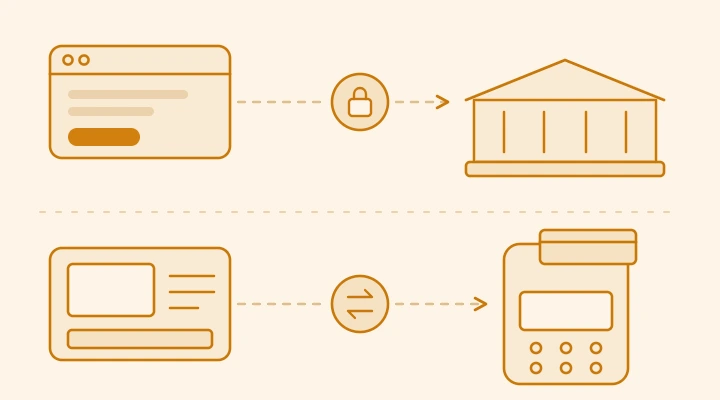
Online payments go through Monetico, the gateway of Crédit Mutuel / CIC, which Odoo does not support natively. Each message returned by the bank is re-sealed and rejected if the seal does not match, and the confirmation is valid from server to server: the order goes through even if the buyer's browser never returns to the site.
At the counter, the register directly controls the payment terminal in Caisse-AP over IP: the cashier never re-enters the amount, and the response from the terminal goes directly to the payment screen. Holiday vouchers are subject to dedicated processing, as these titles cannot legally be refunded in cash: the unreturned difference is accounted for as exceptional income rather than displayed as money owed, which has ended cash discrepancies at the end of the day. Refunds are also processed in Odoo: canceling an order generates the credit note, triggers the refund, and notifies the customer.
Specific: actionable reporting
Two analyses are intentionally distinct. Revenue counts the money at the transaction date, by ticket type and by channel. Participants counts the people on the attendance date, which is not the same day: you can buy today for a visit next month.
Around them: a view of registrations grouped by time slot rather than by event, to plan teams; a true prospective filter “next 30 days,” where Odoo's relative periods only look back; a cross table linking visitor responses to their date of visit; and a dashboard mapping origins by country and departments from the postal codes entered at checkout. The VAT rounding has been brought to the invoice line, so that the displayed amount matches the printed amount.

Overall impact on activity
3 → 1
activities on a single basis
115 000
visitors per year, accurately counted
14
specific Odoo modules delivered
1 000+
migrated shop references
The daily reconciliation between systems has disappeared, and revenue is affected in accounting instead of being reconstructed from two exports. The shop operates on a single catalog and a single stock. Management has defensible attendance figures for the board, because attendance and attendance dates are modeled and not estimated. The counter is faster — fewer screens, no amounts re-entered, no cash discrepancies related to vacation vouchers — and it continues to sell when the connection drops.
The compliance issues that triggered the project are resolved: Windows 11 compatible hardware, NF525 certification, predictable subscription rather than charging for each ticket. And the platform becomes the place where the suite is built rather than an additional system to purchase: B2B presale portals, gift vouchers, provenance analysis, and consolidated daily financial reporting all rely on the same foundation.
A similar project in consideration?
Chef Pixel is an Odoo Ready Partner specialising in point of sale, e-commerce and custom Odoo development for organisations with real operational constraints.